
LinkedIn Marketing Analytics Explained: Which Metrics Actually Predict Future Revenue?
- August 6, 2026
- Blog
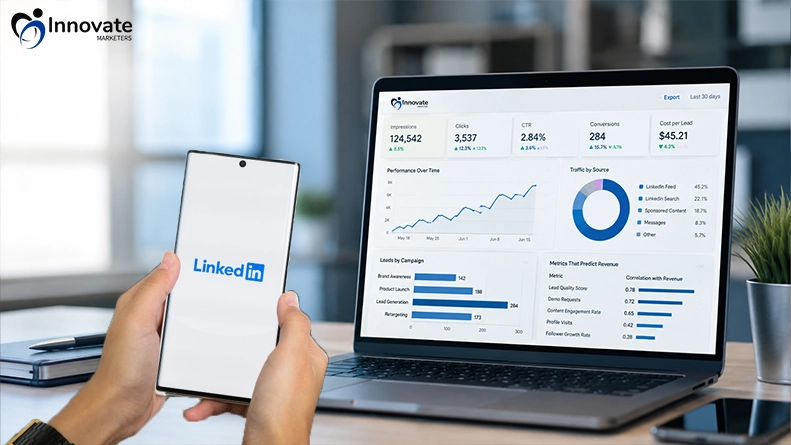
Table of Contents
ToggleSummary: A lot of businesses run campaigns and say that they have high-quality impressions and engagement without realizing that it influences them towards generating income. This article details the real metrics to focus on for LinkedIn marketing, how to get more from your LinkedIn campaigns, and how LinkedIn can help you make campaign decisions based on data to ensure a long-term successful campaign.
In marketing, you tend to get inundated with numbers, and it's easy to look past them. In the world of marketing, the numbers dance a merry jig and can be easy to miss. Thousands of impressions, hundreds of reactions, and dozens of comments can result in a successful campaign, even if it fails. But the trickle of sales numbers begins when quarterly revenue reports are issued.
It's not about data collection; it's about knowing which data matters.
Successful businesses don't exclusively judge LinkedIn’s performance by vanity metrics. They zero in on metrics that indicate interest in buying, catching quality readers, and conversion. This change enables turning analytics into a dependable forecasting system.
By understanding these metrics, an organization that invests in LinkedIn marketing services can make more precise projections for future revenue and can tailor and optimize campaigns to drive actual revenue.
Engagement Quality Matters More Than Engagement Volume
It is better to get a few comments from industry leaders, executives or potential clients, rather than hundreds of sites reacting to the posting. Similarly, more content shares tend to signify higher trust than simple likes as the content shared is attributed to the users' professional identity.
The following engagement data is helpful:
- Adding the comments from the target decision maker(s).
- Shares by industry professionals.
- The person accesses the profile after browsing the content.
- The following items list inquiries created through posts by top-down.
- The consistency of followers in target-industries over time.
The regularity of gained followers in target-industries over time.
All of these metrics indicate higher brand authority amongst the audience who are likely to become future customers.
Click-Through Rate Reveals Genuine Buying Interest
Impressions create awareness of a brand, clicks show interest.
High click-through rates (CTR) mean it's working well with messaging and professionals are interested in more information. On each click, whether it's on a landing page, guide download or service page read, users move a step closer towards converting into qualified leads.
By tracking the CTR of campaigns, marketers can gain insight into:
- Which topics attract buyers?
- What headlines inspire to take action?
- What are the best sectors for responses?
- What are the best industries to respond to?
For businesses that utilize LinkedIn's marketing solutions, many will value the CTR because it offers an early sign of pipeline development ahead of conversions.

Lead Quality Predicts Revenue Better Than Lead Quantity
Even if the potential client ones do correspond to your profile, it could be that they are not quite the kind of leads you are looking for.
But, as marketers, one should assess:
- Company size.
- Industry relevance.
- Decision-making authority.
- Budget potential.
- Purchase readiness.
In fact, a campaign that generates 30 highly qualified prospects can perform better than one to 300 unqualified prospects.
High-quality leads save time in the sales funnel, accelerate purchase decisions and drive higher percentage conversions as one of the best predictors of sales.
Conversion Rate Connects Marketing to Sales Performance
It's logical that conversion rate sits between engagement and revenue.
Whether it's registrations on a webinar, bookings for consultations, downloads of the resources, or requests for demos, LinkedIn conversion tracking shows you just how well your LinkedIn campaigns are driving prospects through the buyer's journey.
As conversion rates continue to improve consistently and accurately, future revenues are more accurately predicted as marketing creates predictable business opportunities.
It shouldn't be a feature that changes hand every year, and it should be a key fundamental for each reporting dashboard on LinkedIn.
Customer Acquisition Cost Helps Measure Long-Term Profitability
For revenue growth to be sustainable, acquisition costs must not get too out of control.
Customer acquisition cost (CAC) is the relationship between the amount spent on a campaign and the number of customers who are gained from it.
When combined with customer lifetime value, it is possible to track whether customers are being generated who are giving your business a positive return over time.
Additionally, numerous organizations integrate LinkedIn analytics with analytics derived from other marketing efforts from a best e-commerce SEO expert to gain a more complete picture of how their organic search and paid social promotions work together throughout the lifetime of a customer.
Revenue Attribution Provides the Clearest Picture
In the end, all marketing metrics should work towards one goal: increasing revenue.
Modern Attribution Models tie LinkedIn actions to CRM records to measure the impact of campaigns on sales.
Rather than just measuring piece-wise marketing strategies, companies can now get a window into:
- Revenue generated by campaigns.
- High-performing audience segments.
- Sales cycle duration.
- Multi-touch customer journeys.
- The ROI on advertising.
The insights help with astute budgeting and ongoing optimization.
Reports could be connected with the assistance of a best white label SEO company, and an SEO company in Carolina to develop a more general digital strategy, with each channel complementing the measurable business growth.

Conclusion
LinkedIn analytics will only be useful for making better business decisions. Instead of focusing on impressions and likes, marketers should measure the quality of the engagement, click through rates, quality leads, conversions, customer acquisition cost, and revenue attribution. These metrics give businesses a better insight into future performance, which allows them to make even more accurate predictions and continually optimize campaigns.
Ready to turn LinkedIn analytics into measurable business growth? Call us today.
FAQs
1. What’s the best Linkedin metric for predicting actual revenue?
Qualified lead combined with a lead conversion rate and revenue attribution provide the best archetype of future business growth.
2. Why are impressions not sufficient to measure the success of a campaign?
The impressions suggest visibility, but aren't the final gift of a customer actually available or do they have a purchasing intent at all?
3. How often you should review LinkedIn analytics?
Monitoring weekly gives a sense of trends and monitoring monthly or quarterly allows you to see long term campaign performance.
4. Does engagement rate directly impact on revenue?
Not necessarily. If you have genuinely engaged decision-makers, their engagement is more valuable than if you have got high engagement from the people who don't fit the profile of your audience.
5) How to boost LinkedIn marketing success?
By targeting the audience, creating targeted content and continually testing and adjusting metrics that impact lead quality, conversions and revenue, not just vanity metrics.
Interesting Reads:
How Google's Latest Core Updates Impact E-Commerce Websites?
How to Audit the Quality of a White Label SEO Provider Before You Sign a Contract?
James Walker is a Digital Advertising Specialist at Innovate Marketers with 9+ years of experience, helping brands grow through data-driven paid campaigns and conversion-focused strategies. With expertise in PPC, social ads, and performance marketing, he creates scalable advertising solutions that maximize ROI and deliver measurable business results.
About us and this blog
We are a digital marketing company with a focus on helping our customers achieve great results across several key areas.
Request a free quote
We offer professional SEO services that help websites increase their organic search score drastically in order to compete for the highest rankings even when it comes to highly competitive keywords.
Subscribe to our newsletter!
More from our blog
See all posts